More than a dozen charged in an alleged $22 million train heist ring — crews busted the brakes, stopped the trains and offloaded cargo onto trucks
A federal indictment unsealed on Nov. 19 charges more than a dozen people with allegedly orchestrating a heist operation that stole over $22 million in cargo — Nike sneakers, Crocs footwear, power tools and other consumer goods — from more than three dozen trains carrying imports through Los Angeles and Long Beach. Prosecutors allege the crews disabled trains at planned locations by busting the brakes, offloaded goods onto trucks, and peddled the cargo to an unnamed reseller. The charges are allegations; if convicted, the defendants face five to 20 years.
Summarized from The Trucker.
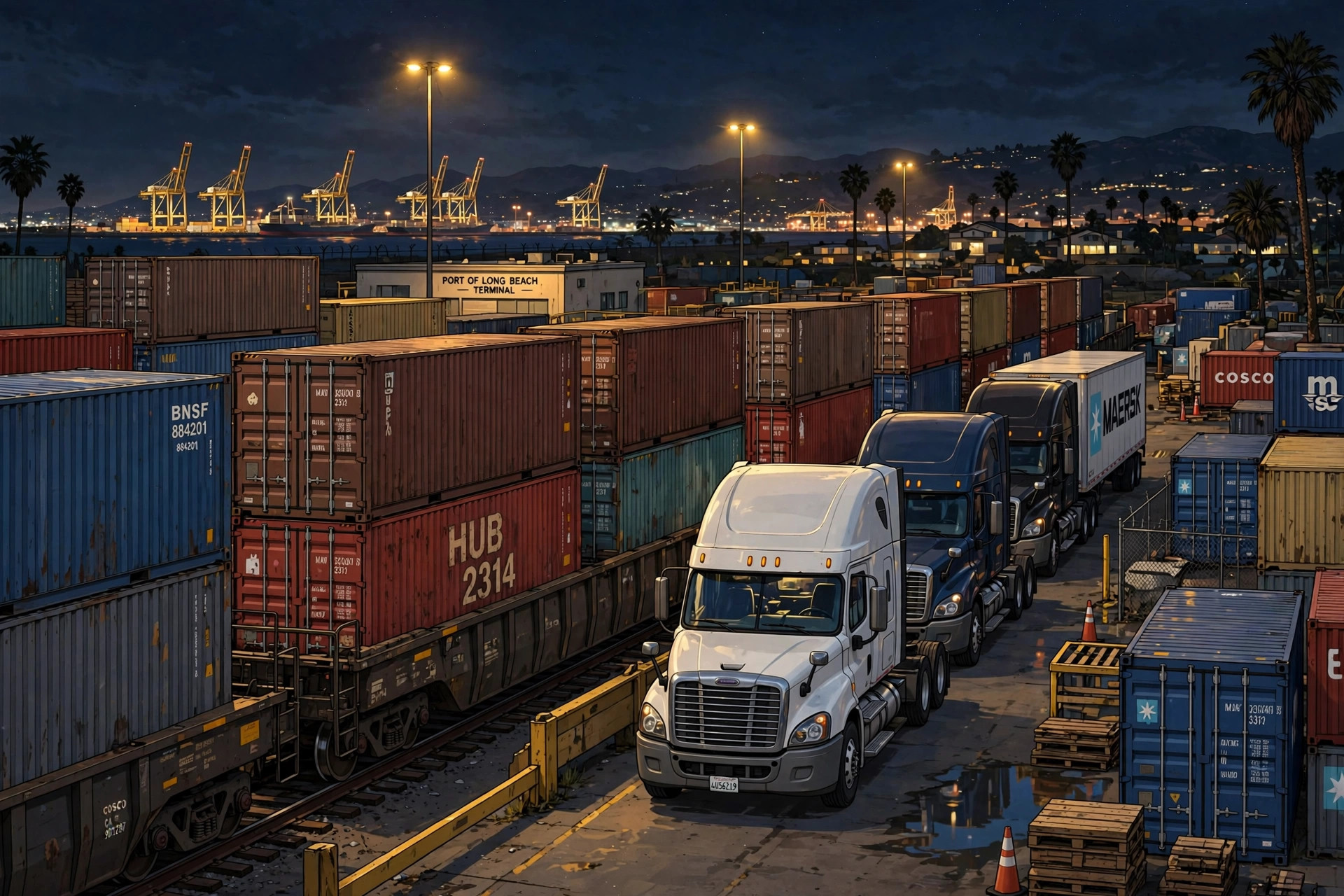
Image: Illustration: AI-generated by CDLWire
More than a dozen people have been charged with allegedly running a train heist operation that stole over $22 million in cargo from major retailers, according to The Trucker on Nov. 21, reporting the Associated Press — a case in which the freight was taken off trains, but trucks were the getaway vehicles and the resale channel was the business model.
A federal indictment unsealed on Thursday, Nov. 19, paints a picture of an organized group that targeted more than three dozen trains carrying Nike sneakers, Crocs footwear, power tools and other consumer goods that were imported into the United States through Los Angeles and Long Beach, which are home to the busiest ports in the country. The charges are allegations in an indictment, not convictions, and CDLWire reports them in those terms throughout: what follows is what prosecutors say the group did, as the indictment alleges it.
The method, as alleged, was low-tech and planned. The men would disable the trains at a planned location by busting the brakes, the indictment alleged, at which point the goods would be offloaded onto trucks. The goods were then peddled to an unnamed company that would resell the stolen merchandise for profit. Trains that shuttle goods to stores and customers around the country have become a prominent target for large-scale theft in recent years, especially at large ports in the United States that receive hundreds of millions of dollars of shipments every day, and the relatively low-tech robberies have demanded attention from the world's largest retailers, including the likes of Amazon. The port geography is the point: a container that comes off a ship at Los Angeles or Long Beach and moves inland by rail is, for its first miles, a predictable, scheduled, slow-moving target carrying exactly the consumer goods — branded footwear and power tools above all — that resell fastest.
What investigators say they found in the group's own communications is the detail that will follow this case. In group chats, the men shared numerous photos and videos of themselves busting into the hulking train cars, and posing with wads of cash and stolen merchandise. They also shared AI photos of themselves captioned "Los Trenes" — which means "the trains" in Spanish — beneath glamorized photos of men throwing boxes of shoes off trains into nearby cars while police helicopters descended overhead. Prosecutors rarely have to argue that a theft ring knew what it was doing when the alleged members have documented and captioned it themselves; the group-chat record, as described, is both the celebration of the scheme and, now, part of the evidence against it.
"The scale of the theft is staggering," said First Assistant United States Attorney Bill Essayli, promising to prosecute any future efforts to steal the merchandise. The 13 men were indicted for conspiracy and theft of interstate railroad cargo. Two were also charged with violence against railroad carriers. If convicted, the men could face anywhere from five to 20 years in federal prison. Those ranges are the statutory exposure the Associated Press reports for the counts as charged; what any individual defendant faces will depend on the counts that survive, the cargo attributed to him, and the court's sentencing process, none of which an indictment decides.
For the trucking industry, a rail theft case belongs in this edition for a practical reason: the cargo did not stay on the railroad. On the indictment's account, every theft ended the same way — goods offloaded onto trucks and moved to a reseller — which means the road leg of a train heist looks, from the shoulder, like ordinary freight: trucks loading boxes near a rail line and driving away. Drivers and small carriers are also the resale market's unwitting edge: stolen branded goods move through unnamed companies that resell for profit, and a too-cheap supply of new Nike sneakers or Milwaukee-class power tools offered to a carrier, a warehouse or a truck stop retailer is the downstream form of a busted brake hose forty miles away. The same hygiene CDLWire applies to cargo theft from trucks applies here — know the shipper, paper the load, and treat freight with no story as freight with the wrong one.
The case now moves to court, where the indictment's account will be tested. What is established today is narrower: a federal indictment was unsealed on Nov. 19, more than a dozen defendants stand charged, the alleged take is over $22 million across more than three dozen trains, and the alleged method — stop the train by breaking its brakes, offload to trucks, sell to a reseller — is now a matter of public record in the ports' own backyard. The freight system that case describes is the one drivers work in every day: containers off the busiest ports in the country, moving through Southern California on a schedule anyone can learn, worth stealing precisely because they are worth shipping.
Sources
Related coverage
 November 21, 2026 · EnforcementDriver in the I-35 Austin pileup that killed five is reindicted on 22 felony counts — two counts upgraded as injury information firmed up
 November 21, 2026 · EnforcementCHP's Sonora obstructed-window blitz wrote 53 tint citations and 45 other vehicle-code citations in one day — and the law it enforced is narrower than the headline
 November 20, 2026 · EnforcementThe lead defendant in the $100 million Brinks truck heist pleaded guilty — his crew followed truckers to their stops for five months
Comments
Loading comments…